
Matcha Guides
How to Use a Matcha Whisk: A Simple Step-by-Step
Matcha technique
Using a matcha whisk well comes down to a light grip, a brisk back-and-forth motion, and a little prep. Here is the full routine, plus how to fix flat foam and care for the whisk.
Soak and warm the whisk first, then whisk briskly in a straight back-and-forth “W” motion — not circles — for about 15–20 seconds until a fine foam forms. Rinse in warm water and air-dry on a holder.
What a matcha whisk actually does
A bamboo matcha whisk — often called a chasen — is a single piece of bamboo split into dozens of fine tines. Its only job is to break up matcha powder and pull air into the liquid so the drink turns smooth and lightly foamed instead of grainy. The many thin tines are what a spoon or fork can’t replicate: they move through the whole bowl at once and lift a fine foam to the surface.
Because the tool is delicate, a little preparation and the right motion matter far more than force. You are aerating, not scrubbing.
Before you whisk: soak and warm
Two quick habits protect the whisk and improve the result:
- Soak the tines. Rest the whisk head in warm water for a minute or two, especially when it is new. Warm water helps the tines flex open and lowers the chance of a tine snapping on first use.
- Warm the bowl. Swirl a little warm water in your bowl, then pour it out. A warm bowl holds temperature and makes foam easier to build.
Add your matcha to the dry, warmed bowl. Sifting the powder first is optional but it makes clumps far less likely.
How to use a matcha whisk, step by step
- Add your matcha to a warm, wide bowl. A little water first makes a smooth paste and helps loosen any lumps.
- Pour in the rest of your water (not boiling — let it cool briefly after the kettle).
- Hold the whisk handle lightly between your fingers, resting your wrist, not your whole arm.
- Whisk briskly in a straight back-and-forth motion, keeping the tines just off the bottom of the bowl.
- Continue for about 15–20 seconds until a fine, even foam covers the surface.
- Finish with a slow figure-eight and lift the whisk straight out to leave the foam intact.
Why the “W” motion beats stirring in circles
Stirring in circles pushes the liquid around but traps very little air, so the drink stays flat. A quick back-and-forth path — shaped like a W or M — lets the tines cut across the surface again and again, folding air in with every pass. Speed matters more than pressure: keep your wrist loose and let the whisk do the work just below the surface.
Fixing weak foam or clumps
If the foam won’t build, the water may be too hot, the whisk may be dragging on the bottom, or the motion may be too slow. Lift the tines slightly, speed up, and keep the path straight. If the powder is clumping, sift it next time and start with a small splash of water to make a paste. Our guide on making matcha without clumps walks through this in detail.
After whisking: rinse, dry, and store
Rinse the whisk in warm water only — no soap, which bamboo can absorb. Shake off the excess and let it air-dry tines-up. Resting it on a whisk holder keeps the tines splayed in their natural shape so they last longer. For the full routine, see how to clean and store a bamboo matcha whisk. Deciding between bamboo and an electric tool? Compare them in bamboo whisk vs electric frother.
Sets that come with a bamboo whisk
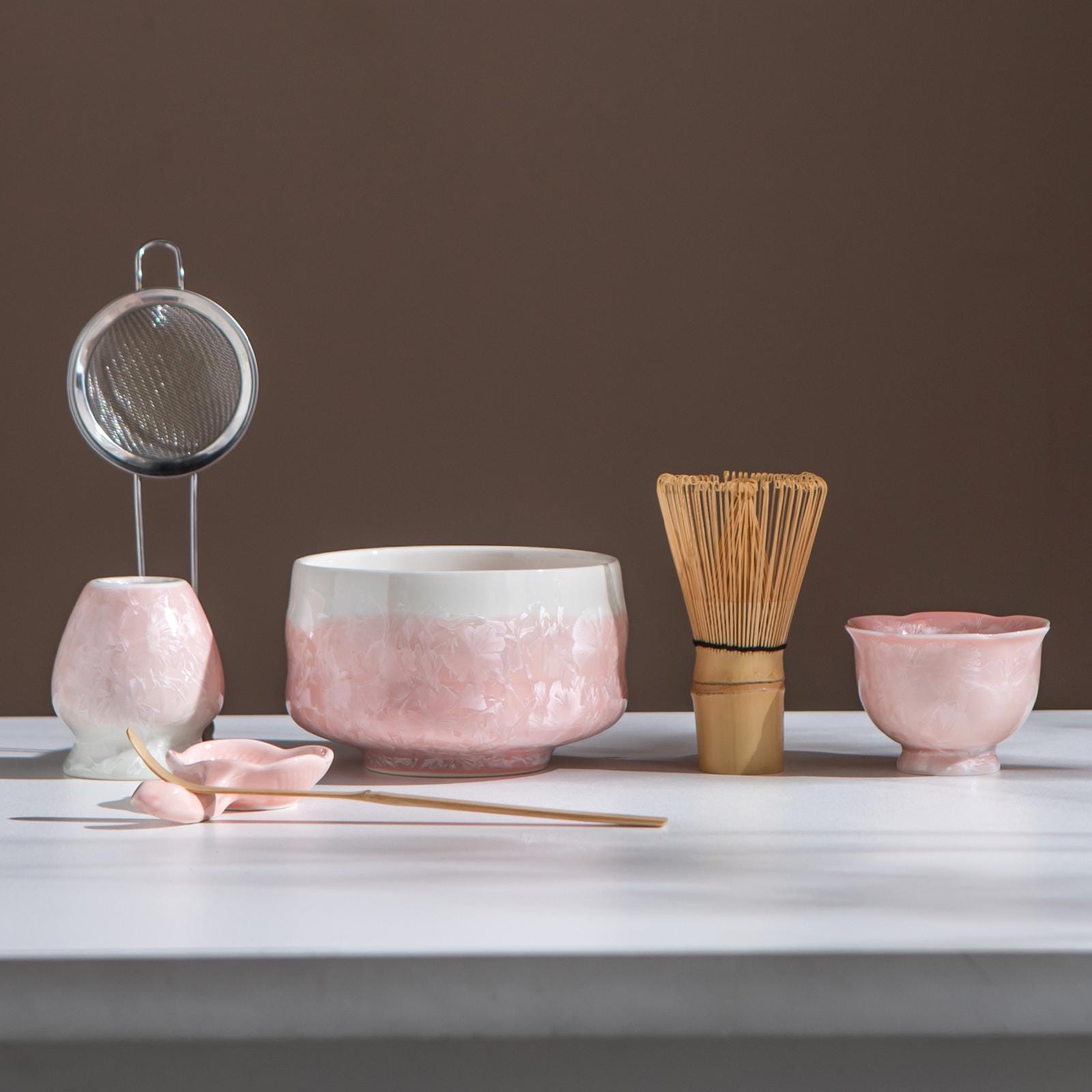
Every set below pairs a ceramic bowl with a bamboo whisk, so you have the tool and the vessel in one box. Browse more in matcha starter kits and tea cups & matcha accessories.
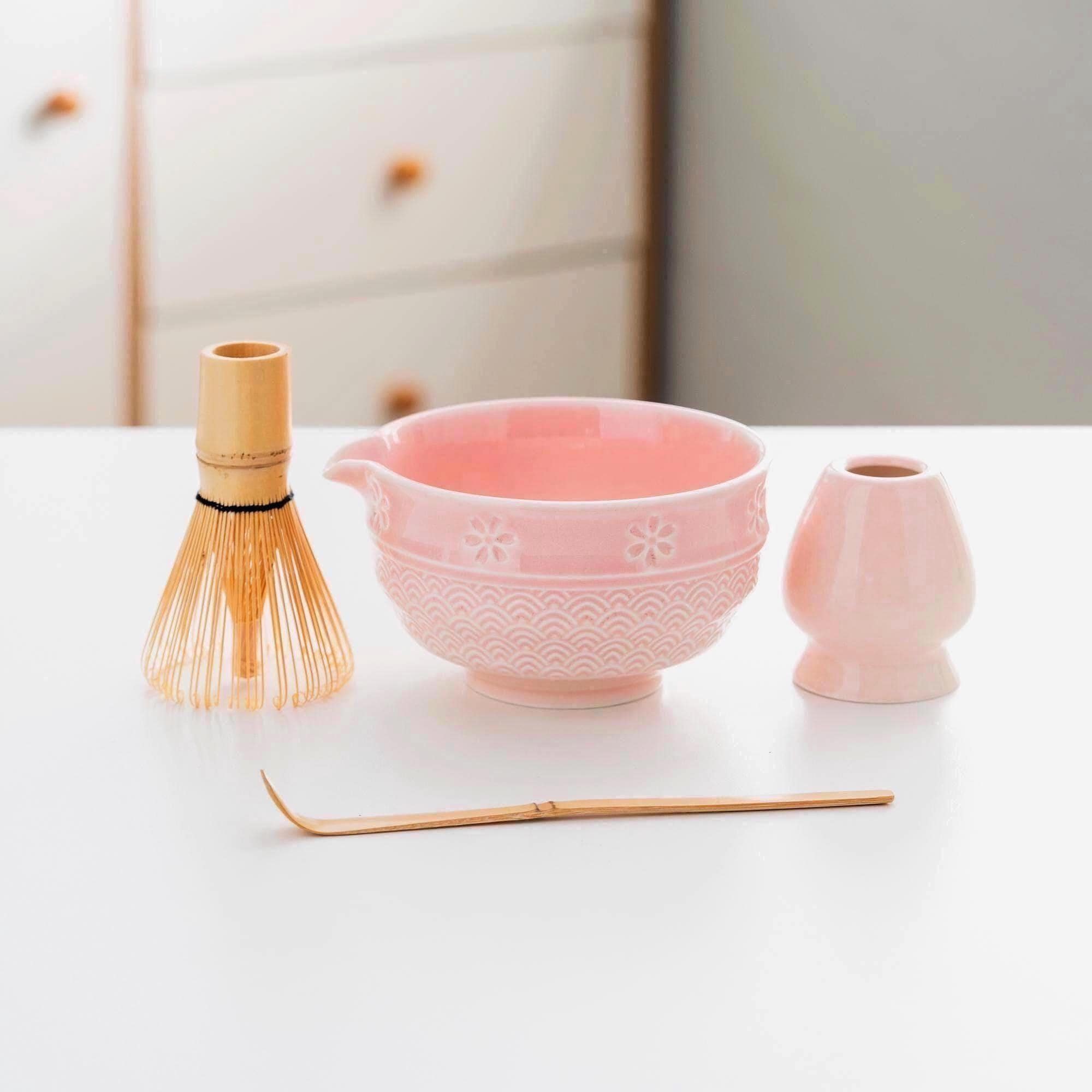
Pink Sakura Ceramic Matcha Bowl Set with Bamboo Whisk & Holder, 420ml Starter Kit
$31.62
View this set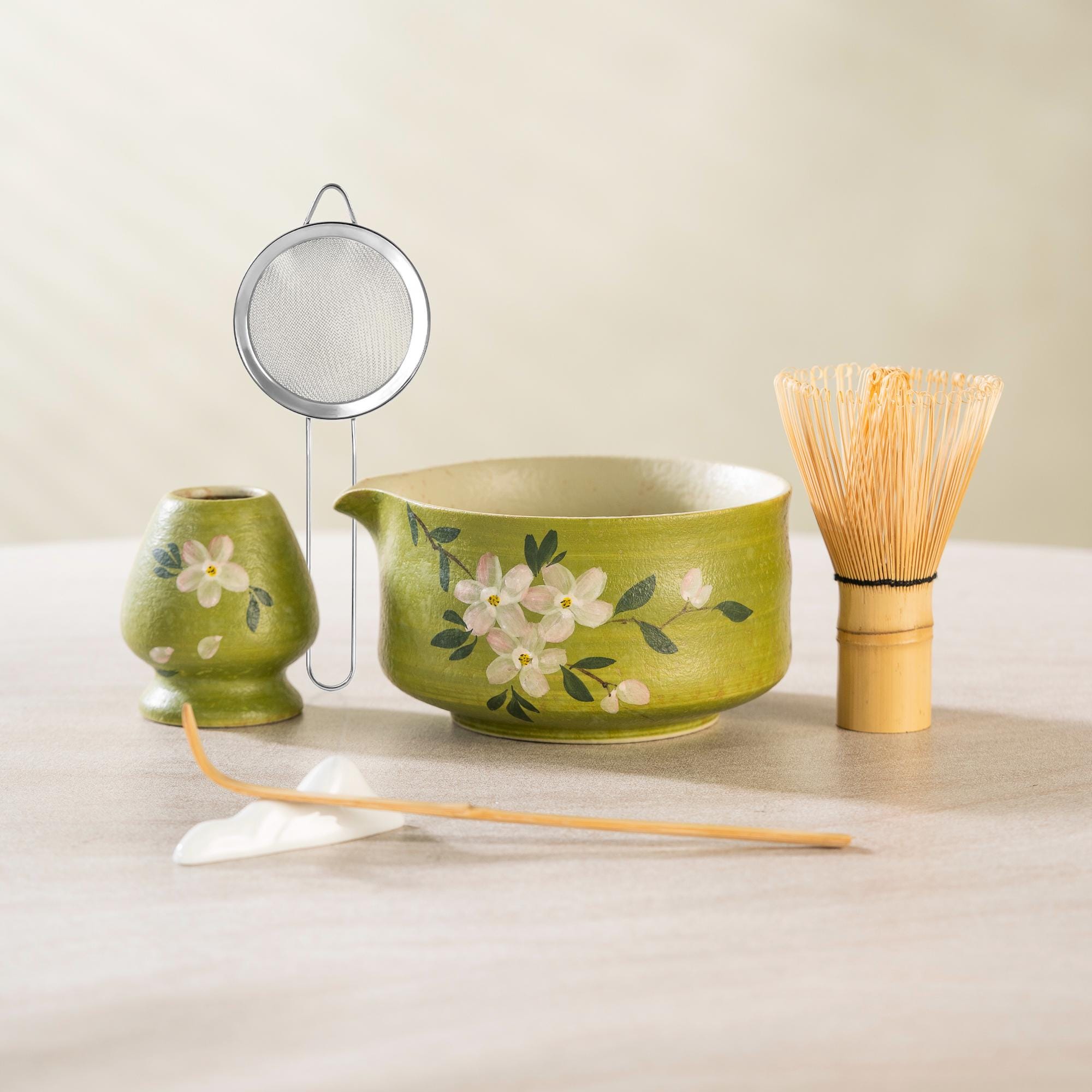
Frequently asked questions
How long should I whisk matcha?
About 15–20 seconds — until a fine, even layer of foam covers the surface.
Should I whisk matcha in circles?
No. A light back-and-forth “W” or “M” motion pulls in far more air and builds better foam than stirring in circles.
Do I need to soak a new bamboo whisk?
Yes. Resting the tines in warm water for a minute or two before first use helps them flex open and reduces the chance of a tine snapping.
Can I use an electric frother instead of a whisk?
You can. A frother is faster and works well for lattes, while a bamboo whisk gives more control over foam texture. See our whisk-vs-frother comparison for the trade-offs.
Why does my matcha turn out clumpy?
Usually undissolved powder or water that is too hot. Sifting first and starting with a small splash of water to make a paste both help.
How do I clean a bamboo whisk?
Rinse it in warm water only — no soap — shake off the excess, and air-dry it tines-up, ideally on a whisk holder so the tines keep their shape.
