
Matcha Guides
How to Make Matcha Latte at Home
Jun
How to Make a Matcha Latte at Home
How Do You Make a Matcha Latte at Home?
The single most important step beginners skip: use water below boiling temperature. Boiling water (100°C) scorches matcha and turns it bitter. 70–80°C gives a smooth, sweet result. If you do not have a temperature-controlled kettle, let boiling water sit for 3–4 minutes before using.
What You Need to Make a Matcha Latte
| Item | Why It Matters | Required? |
|---|---|---|
| Matcha powder (culinary or ceremonial grade) | Ceremonial grade gives sweeter flavor; culinary grade works well with milk | Yes |
| Matcha bowl (chawan) with spout | Wide bowl makes whisking easier; spout makes pouring into the glass clean | Recommended |
| Bamboo whisk (chasen) | Creates smooth, lump-free froth that a spoon or regular whisk cannot achieve | Yes (or electric frother) |
| Milk of choice (oat, almond, whole, coconut) | Oat milk and whole milk froth best; oat milk is most popular for matcha lattes | Yes |
| Hot water 70–80°C (158–176°F) | Below boiling to prevent bitterness; use thermometer or wait 3 min after boiling | Yes |
| Milk frother or steam wand | Froths milk for the latte layer; electric handheld frother works well | Optional but recommended |
| Sifter / fine mesh strainer | Breaks up clumps before whisking; makes a smoother final drink | Optional |
| Sweetener (honey, maple syrup, simple syrup) | Matcha has natural bitterness; sweetener balances it | Optional |
A ceramic matcha bowl with a spout is particularly useful for lattes because you can pour the whisked matcha directly into a latte glass without spilling. See: Ceramic Matcha Bowl with Spout: Why Beginners Love It.
Step-by-Step: Hot Matcha Latte Recipe
Serves 1 • Prep: 5 minutes
Sift the matcha powder
Add 1–2 tsp of matcha powder to a fine mesh sifter held over your matcha bowl. Press through with a spoon. Sifting breaks up clumps and ensures a smooth, lump-free latte.
Add hot water (70–80°C)
Pour 2 oz (60ml) of hot water that is not boiling — 70–80°C / 158–176°F. If you do not have a temperature kettle, let boiled water rest 3–4 minutes first.
Whisk in a W or M motion
Using your bamboo whisk, whisk briskly in a W or M pattern (not circles) until the matcha is fully dissolved and a light froth forms on the surface. This takes 20–30 seconds.
Froth your milk
Heat 6–8 oz of milk to about 60–65°C (140–150°F). Use a steam wand, electric frother, or heat in a jar and shake vigorously. Oat milk or whole milk froth best.
Pour matcha into your glass
Pour the whisked matcha into a warm latte glass or mug. If your matcha bowl has a spout, this step is easy and spill-free.
Add frothed milk and sweeten
Pour frothed milk over the matcha. Add sweetener (honey, maple syrup, or simple syrup) if desired and stir gently. Serve immediately.
How to Make an Iced Matcha Latte
The method is nearly identical to hot, with two differences: use cold milk instead of frothed hot milk, and pour over ice.
- Sift 1–2 tsp matcha into your bowl.
- Add 2 oz (60ml) of hot water (70–80°C) and whisk until smooth. Always use hot water for this step — cold water will not dissolve the matcha.
- Fill a glass with ice.
- Pour the whisked matcha concentrate over the ice.
- Top with 6–8 oz of cold oat milk or milk of choice. Do not stir for a layered look.
- Add sweetener and stir before drinking.
More iced matcha tips: How to Make Iced Matcha Latte Without Clumps
Why Your Matcha Latte Tastes Bitter or Lumpy
| Mistake | What Happens | Fix |
|---|---|---|
| Using boiling water (100°C) | Scorches the amino acids; produces harsh, bitter flavor | Use 70–80°C water; wait 3 min after boiling |
| Skipping the sifter | Powder clumps into lumps that do not dissolve | Sift through fine mesh strainer before whisking |
| Stirring in circles | Does not aerate properly; produces weak froth | Whisk in a brisk W or M pattern, wrist movement only |
| Too much powder | Overwhelmingly bitter, especially with light milk | Start with 1 tsp; increase to 2 tsp for stronger flavor |
| Adding cold water to matcha | Powder does not dissolve; permanent clumps | Always use hot water (70–80°C) to dissolve first |
| Using low-quality matcha | Bitter, grassy, brown color instead of vivid green | Use ceremonial or high culinary grade; check color is bright green |
Matcha Bowl Sets with Spout for Latte Making
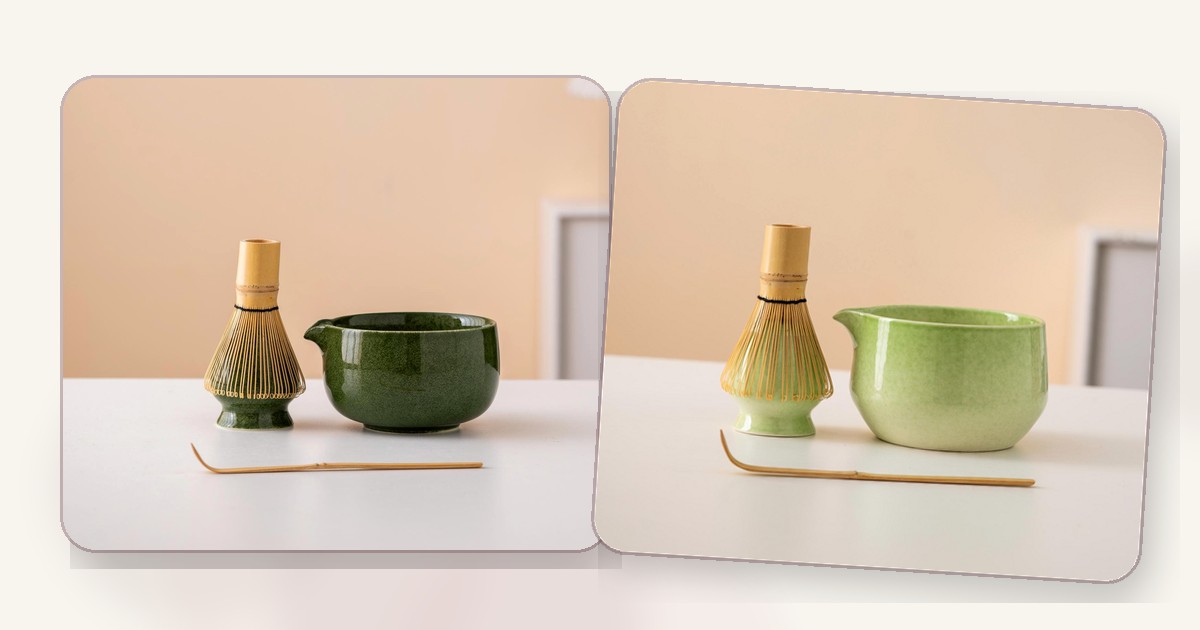
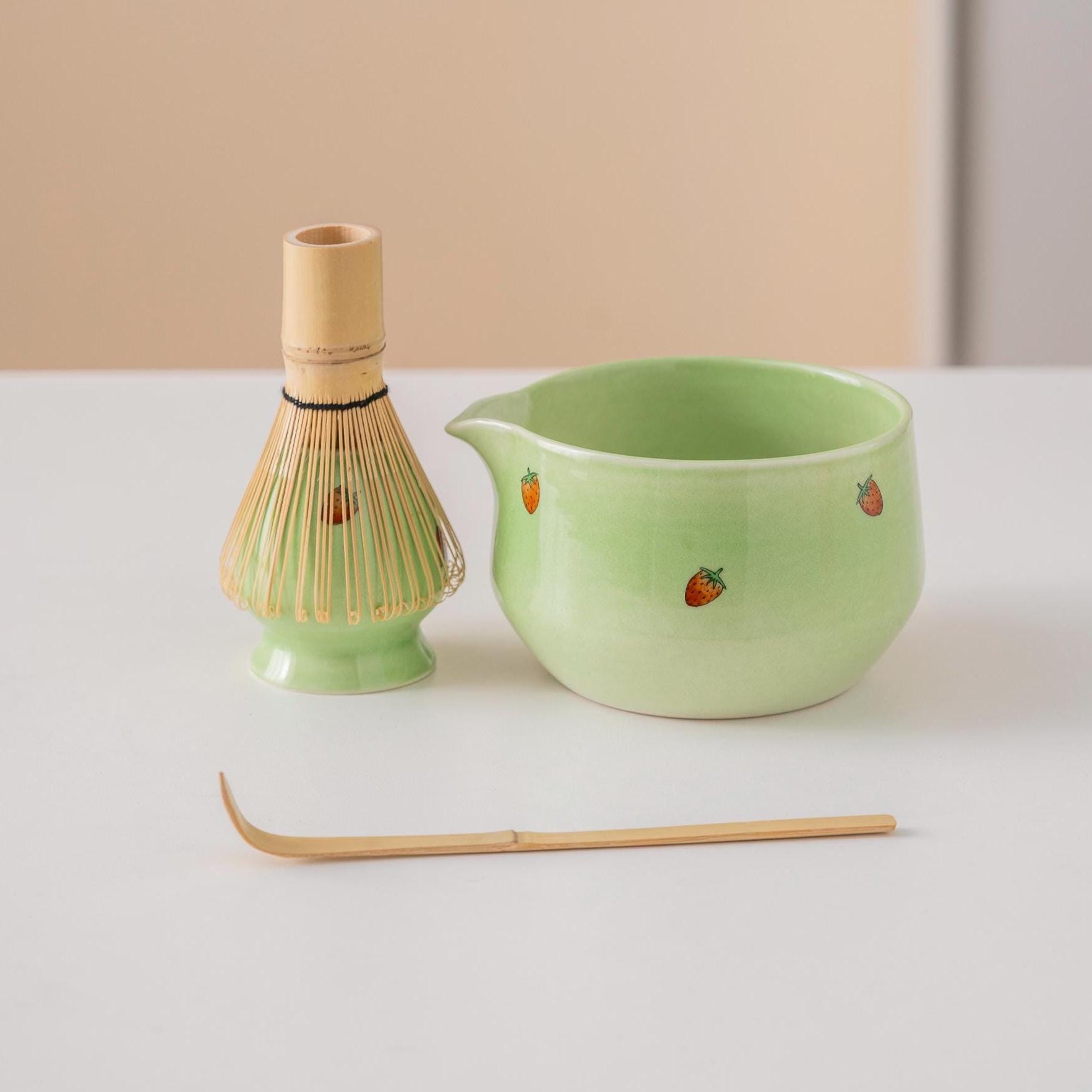
A matcha bowl with a spout makes pouring your whisked matcha into a latte glass much easier. These starter kits include a bowl with spout, bamboo whisk, and whisk holder.
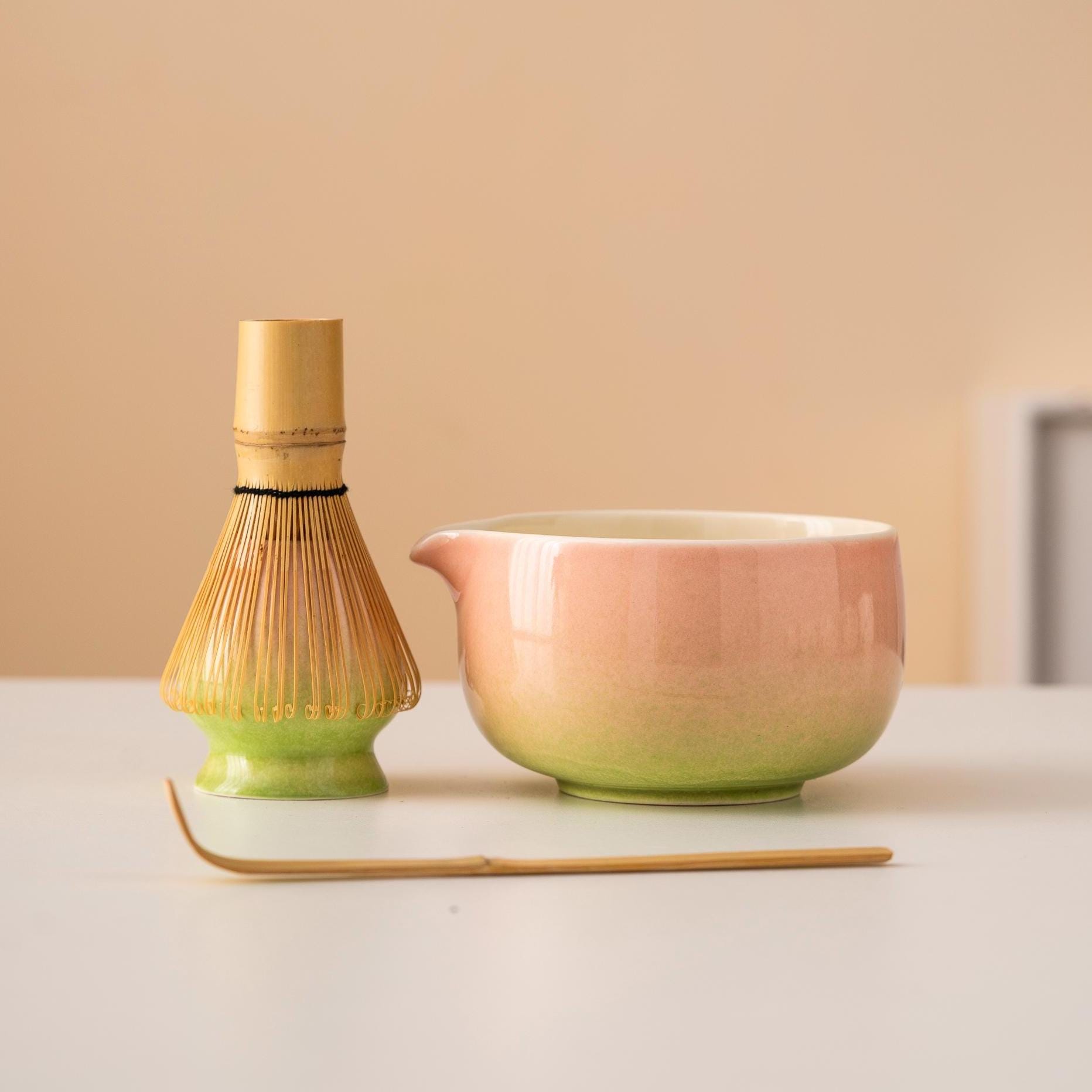
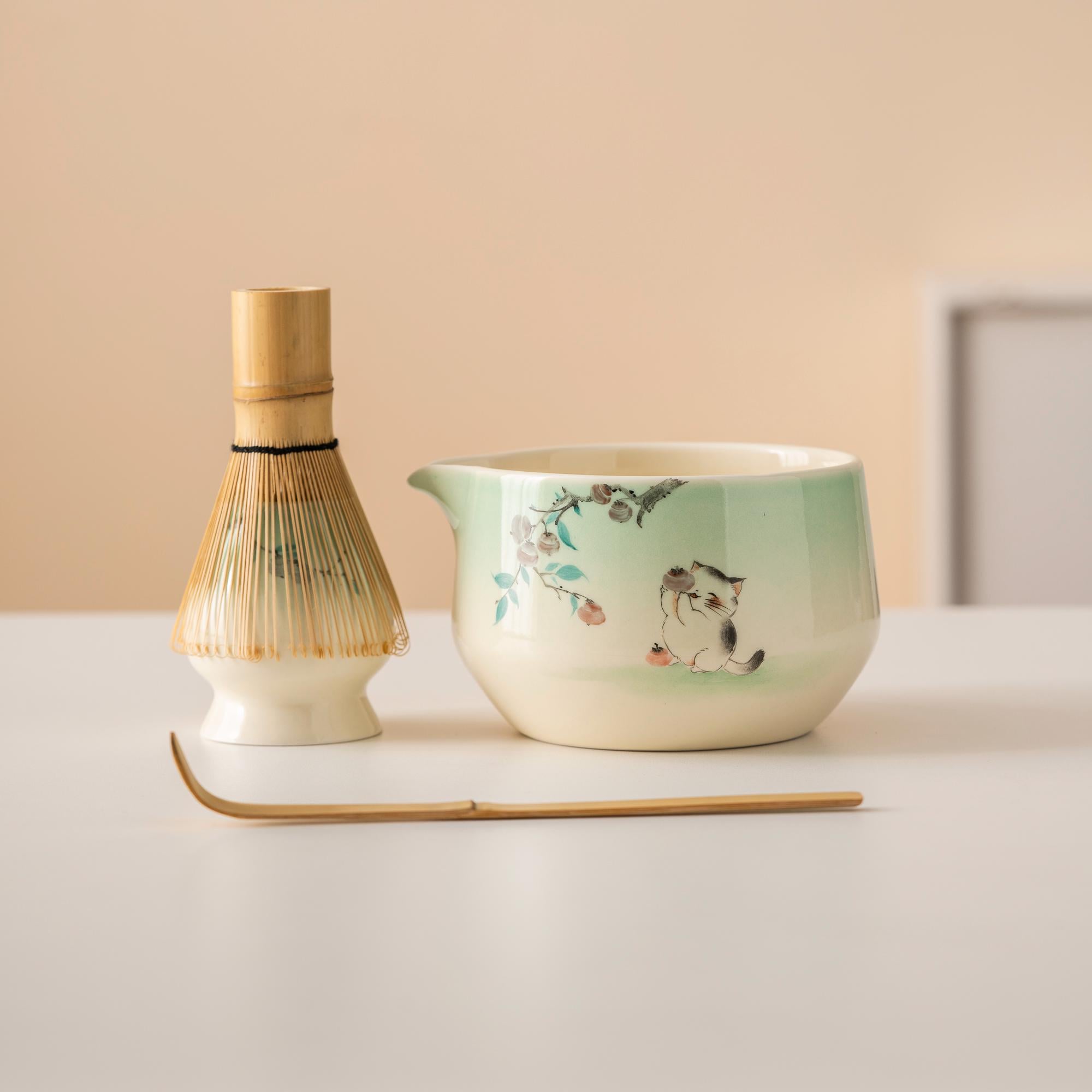
Green Cat Hand-painted Ceramic Matcha Bowl Set with Spout, Bamboo Whisk & Holder, 450ml
Frequently Asked Questions
What is the ratio of matcha to milk for a matcha latte?
A standard matcha latte uses 1–2 teaspoons (2–4g) of matcha powder dissolved in 2 oz (60ml) of hot water, topped with 6–8 oz (180–240ml) of milk. For a stronger, more concentrated drink, use 2 tsp matcha with 4 oz milk. For a milder latte, use 1 tsp with 8 oz milk.
Can I make a matcha latte without a whisk?
You can use an electric handheld frother to dissolve matcha powder in hot water if you do not have a bamboo whisk. A fork will work in a pinch but will not produce proper froth. A blender also works and creates a foamy result. The bamboo chasen gives the smoothest, most traditional texture.
What milk is best for a matcha latte?
Oat milk is the most popular choice for matcha lattes because it froths well and has a neutral, slightly sweet flavor that complements matcha. Whole milk also froths well and gives a creamier result. Almond milk is thinner and less creamy. Coconut milk adds a tropical note that some people enjoy with matcha.
Should I use ceremonial grade or culinary grade matcha for lattes?
Culinary grade matcha is designed to be mixed with ingredients like milk and holds up well to the dilution. Ceremonial grade works too and gives a sweeter, more delicate flavor, but the extra sweetness can be subtle when masked by milk. Either grade works; ceremonial grade is better for drinking straight (usucha), culinary grade is more cost-effective for lattes.
Why is my matcha latte bitter?
The most common cause is water that is too hot. Boiling water (100°C) scorches the catechins in matcha and produces harsh bitterness. Use water at 70–80°C (158–176°F). Other causes include using too much matcha powder (reduce to 1 tsp), low-quality matcha, or skipping the sifting step which leaves undissolved clumps.
Can I make a matcha latte without a matcha bowl?
Yes. You can whisk matcha in any small bowl, a measuring cup, or even a jar with a tight lid (shake method). A wide, shallow bowl makes whisking easier because the whisk has room to move. A bowl with a spout makes pouring into a glass easier but is not required.
How many calories are in a matcha latte?
A matcha latte made with oat milk (8 oz) and no added sweetener contains approximately 90–130 calories, depending on the milk brand. With whole milk, approximately 120–150 calories. Adding honey (1 tsp) adds about 20 calories. Matcha powder itself contributes only 5–10 calories per serving.
How do I make a matcha latte without a sifter?
If you do not have a sifter, use the back of a spoon to press the matcha powder against the side of your bowl before adding water. This breaks up most clumps. Alternatively, whisk dry matcha powder briefly before adding water. A fine mesh tea strainer can substitute for a dedicated matcha sifter.
More Matcha Guides
